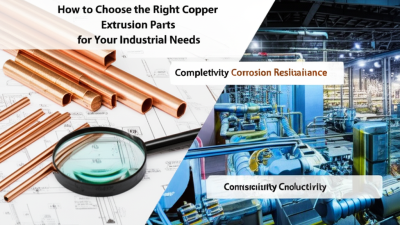
You know, in the ever-changing world of Industrial Manufacturing, choosing the right Copper extrusion Parts is pretty key if you want things to run smoothly and efficiently. I came across a report from the International Copper Association that says demand for copper parts is expected to shoot up quite a bit—thanks to new innovations in electrical stuff and green energy projects.
At Shaanxi Brilliant Machinery Co., Ltd., we totally get how important this trend is. Our focus on top-notch manufacturing makes us a real leader when it comes to producing high-quality mechanical parts. If you think about your specific needs and the different qualities of copper extrusion, your industry can actually benefit from better durability and eco-friendliness.
We’re always pushing to innovate and improve, so we don’t just meet expectations—we go beyond them. That’s how we keep our customers happy and uphold quality standards—every single time.
Understanding the Importance of Copper Extrusion Parts in Industry
Copper extrusion parts are pretty essential across a bunch of industries because of their amazing electrical and thermal properties. Whether it’s electronics, construction, or automotive stuff, these components help keep everything running smoothly and last longer. What I love about copper is how it’s resistant to rust and super malleable—makes it perfect for crafting those complex shapes and custom parts that need to do specific jobs.
Getting why these copper parts matter starts with realizing how much they boost energy efficiency and keep things reliable. For example, in electrical setups, good copper components cut down on energy waste, helping devices work better and more efficiently. Plus, in building and construction, copper is often the go-to for plumbing and HVAC because it can handle high temps and doesn’t easily corrode over time. When industries pick the right copper extrusion parts, they’re not just making sure everything works well—they’re also hitting safety and durability marks, which are super important these days in a really competitive market.
Understanding the Demand for Copper Extrusion Parts in Industry
Identifying Key Factors for Selecting Copper Extrusion Components
When you're choosing copper extrusion parts for industrial stuff, it's really important to pay attention to some key factors to make sure they perform well and last a long time. First off, you gotta understand what the specific application needs — like, how good the parts need to be at conducting heat and electricity. A report by the Copper Development Association mentions that copper’s thermal conductivity falls between 300 and 400 W/m·K, which makes it a top pick for heat exchangers and electrical components. So, making sure the parts you pick meet or even beat these conductivity levels is actually going to make a difference in how efficient your setup is.
Another thing to keep in mind is what alloy the copper is made of. Different alloys like C11000 or C14500 have their own perks—they can vary quite a bit in strength, ductility, and resistance to corrosion. According to some research from the Institute of Materials Science, these mechanical properties can change a lot depending on the alloy, which will impact how durable and reliable those extrusion parts are. And don’t forget about manufacturing details—like the tolerances and dimensions. Even small variations here can mess with assembly and overall performance, especially in critical applications. So, taking a careful look at these aspects will help you pick the best fit for whatever industrial project you’re working on.
Evaluating the Manufacturing Processes for Copper Extrusion Parts
When you're looking into making copper extrusion parts, it’s pretty important to think about all the factors that can influence the quality and how well the final product turns out. The extrusion process, for those not super familiar, involves pushing heated copper billets through a shaped die—that step really matters because it impacts things like the strength of the metal and how smooth the surface is. I recently read a report by the Copper Development Association that pointed out how paying close attention to die design can actually make things more efficient. They mentioned it could cut down material waste by about 15%, which is pretty impressive and also boosts overall production.
A word of advice—work hand in hand with your extrusion supplier. Make sure to give them all the details about what you need, like the exact dimensions, tensile strength, and finish quality. The more precise you are, the better the final outcome will be.
Another thing that’s really worth thinking about is how you handle heat treatment after extrusion. Different methods like annealing or quenching can really change the copper’s properties, especially things like conductivity and strength. The 2022 Global Copper Processing Study shows that properly heat-treated copper parts can actually last up to 30% longer in terms of fatigue resistance. So, teaming up with manufacturers who have advanced heat treatment options can make a huge difference in how long these parts last and how well they perform, especially in industrial settings.
And, don’t forget—be sure to ask for certifications for your materials and processes. That’s a good way to make sure everything meets industry standards and that your parts are reliable over time.
Comparing Different Alloys and Their Properties for Industrial Applications
When you're trying to pick out copper extrusion parts for industrial use, it's pretty important to really get a handle on the different alloys and what makes each one special. For example, copper alloys like C11000, which is Electrolytic Tough Pitch Copper, and C26000, also known as Brass, each bring their own set of qualities to the table. C11000 is top-notch for electrical stuff — it conducts electricity really well, around 97% IACS — so you'll often see it in electrical connectors and components. On the flip side, C26000 is known for being easy to work with (good machinability) and quite strong, making it a solid choice when durability and resistance to corrosion matter.
Actually, the International Copper Association mentions that over 60% of all copper is used in electrical applications — which just shows how critical choosing the right alloy is to meet specific needs in industry. Plus, there's this report from the Copper Development Association pointing out that brass alloys are seeing a rise in plumbing and architectural uses, mainly because they have antimicrobial properties and look pretty nice. By really understanding these differences, you not only pick the right material but also help make sure your components last longer and perform better in the long run, no matter what industrial setting you're dealing with.
Assessing Quality Standards and Certifications for Copper Extrusions
When you're choosing copper extrusion parts for industrial use, it's really important to look at the quality standards and certifications involved. Good quality copper extrusions usually meet certain industry benchmarks like ASTM, ISO, or SAE. These standards are basically guarantees that the material will perform reliably and hold up well—even in tough environments. Honestly, it’s a smart move to check if the manufacturer follows these standards because that’s a pretty clear sign they’re committed to making top-notch products.
And, on top of that, certifications like RoHS, CE, and UL can give you extra peace of mind. RoHS, for example, makes sure the materials are free from harmful substances—which is especially important if you're dealing with electronics or auto parts. The CE mark shows that the product meets EU safety and health requirements, while UL certification points to safety testing that the product has passed. Picking manufacturers that have these certifications means you’re not only getting something that performs well but also meets all the safety and environmental rules. That way, you can trust that the copper extrusions are good to go for your operation—that’s what counts, right?
Budgeting and Cost Considerations in Copper Extrusion Selection
When you're picking copper extrusion parts for industrial use, understanding the costs involved is a must. The initial price of copper can really swing depending on the market, so it’s smart to keep an eye on those prices so you can make smarter buying choices. But it’s not just about the raw material cost — you also want to think about the long-term value these parts bring to your operations. Sometimes spending a bit more on higher-quality extrusions pays off in the end because you’ll likely spend less on repairs and replacements down the line, saving you money overall.
Also, when you're checking out different suppliers, it’s worth looking beyond just the sticker price. You should consider the total cost of ownership — like manufacturing fees, delivery charges, and even the costs linked to waste if the parts aren’t up to par. Don’t forget that lead times matter, too. If you need parts ASAP and have to pay for expedited shipping, that can really add up. By weighing all these factors carefully against your budget, you can pick copper extrusion parts that not only perform well but also fit your financial plan in the long run.
Innovative Applications of Copper Alloy Die Castings in the Food and Beverage Industry
Copper alloy die castings play a pivotal role in the food and beverage industry, primarily due to their exceptional properties such as resistance to corrosion, durability, and hygiene. According to industry reports, the food sector increasingly demands materials that combine safety and performance, and copper alloys—predominantly brass and bronze—exceed these requirements. Their inherent ability to withstand high temperatures and resist wear makes them ideal for use in various machinery, from food preparation equipment to packaging systems.
Furthermore, copper alloys boast excellent heat transfer characteristics, essential for processes such as cooking and thermal processing in the food industry. A study by the International Copper Association highlights that using copper and its alloys can improve energy efficiency in food manufacturing by up to 30%. This not only enhances performance but also aligns with the industry's growing emphasis on sustainability. Therefore, the application of copper alloy die castings is not just a trend but a strategic choice for manufacturers seeking reliability and compliance with stringent food safety standards.
FAQS
: Copper extrusion parts are used in industries such as electronics, construction, and automotive for their exceptional electrical and thermal conductivity, resistance to corrosion, and malleability.
Quality copper components minimize energy loss, enhancing the overall efficiency and operational reliability of electrical devices and machinery.
The extrusion process, where heated copper billets are forced through a shaped die, is crucial as it directly affects the mechanical properties and surface finish of the final products.
Proper heat treatment methods, such as annealing or quenching, can enhance conductivity and strength, improving fatigue resistance in copper extrusion parts by up to 30%.
It’s important to provide detailed specifications, including dimensions, tensile requirements, and surface finish standards, to optimize the production process.
C11000 (Electrolytic Tough Pitch Copper) is known for its excellent electrical conductivity and is used in electrical components, while C26000 (Brass) offers good machinability and strength for plumbing and architectural applications.
Requesting certifications for materials and processes ensures compliance with industry standards and enhances the reliability of the products.
The demand for brass alloys has increased due to their antimicrobial properties and aesthetic appeal, particularly in plumbing and architectural applications.
Conclusion
When you're picking Copper Extrusion Parts for industrial use, it’s super important to really get why they matter — you know, how they can boost your overall efficiency and make your products more reliable. There are a bunch of key things to think about, like what the application actually needs, the different types of copper alloys out there, and how the manufacturing process works. Plus, don’t forget to check out quality standards and certifications; they’re a good way to make sure the parts tick all the industry boxes.
Of course, your budget’s gotta be taken into account too. Finding that sweet spot where the parts are affordable but still up to par is crucial for keeping your project on track. Here at Shaanxi Brilliant Machinery Co., Ltd., we’re all about providing top-notch Copper Extrusion Parts that fit a variety of needs — all while sticking to our core values of quality, sustainability, and customer satisfaction. We really believe in doing our part to help your projects succeed!